
Semiconductors
Predict how electronic structure, defect chemistry, and thermal properties drive device performance and yield across process parameters and next-generation materials to narrow choices before a fabrication run.
How do defects, surfaces, and process materials effect device performance and manufacturing yield?
Electronic-structure calculations predict defect levels and band alignment. Machine-learned potentials calculate thermal transport at device scale. Surrogates map that physics to process conditions.
Process and yield data calibrates the digital experiments and surrogates against your line, not an idealized one.
Narrow material and process choices earlier with evidence grounded in atomic-scale behavior.
Phonon Calculations With PHIN
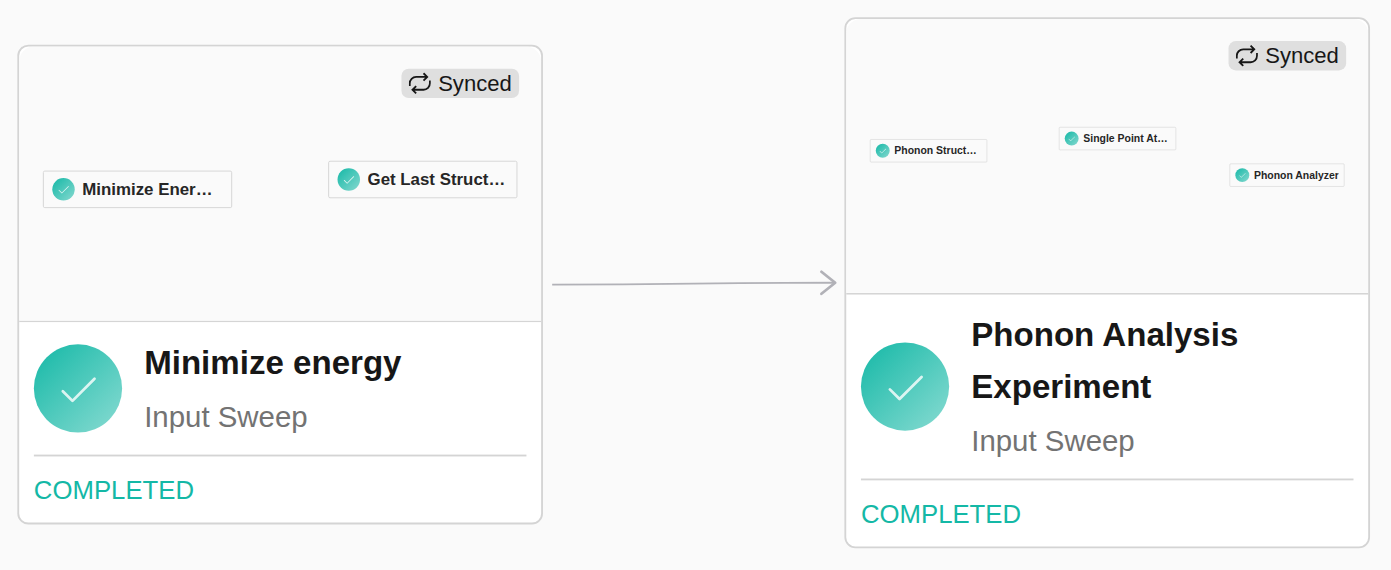
PHIN OS and PHIN Atomic engine provide a powerful platform for performing high-throughput phonon calculations. Its modular design, active-learning based engine, and efficient task orchestration make it possible to explore phonon properties across diverse material classes with accuracy and speed beyond what is possible with a DFT-only approach. The computed phonon band structures and DOS are in good agreement with DFT-based reports, demonstrating that PHIN Atomic and PHIN OS are powerful tools for reliable high-throughput phonon calculations. The results presented here capture the essential vibrational features of MAX phases, NiTi shape memory alloys, and Mg₃Bi₂ thermoelectric, underscoring the utility of PHIN OS for high-throughput materials discovery, characterization, and design.
Read the case study →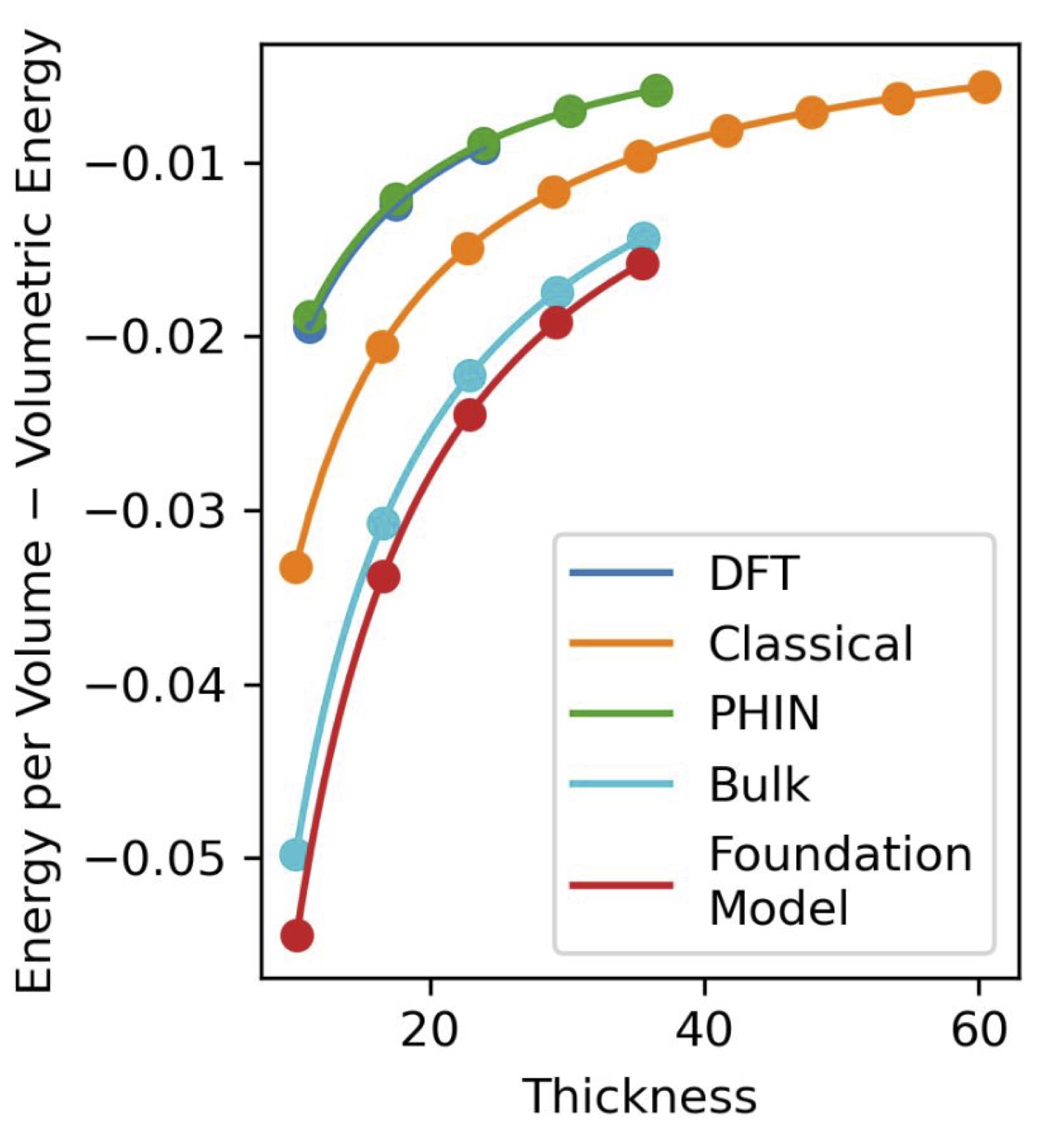
Semiconductor Simulations With PHIN
By simulating silicon vacancy energy, surface energy, and melting temperature, we showcase the ability of MLIPs to simulate real properties relevant to semiconductor development. We show that fine-tuning in PHIN-atomic is necessary to accurately simulate the properties of real materials and is a significant improvement over pretrained models.
Read the case study →