
Catalysis
Engineer PGM-free, earth-abundant catalysts without the guesswork by modeling reaction pathways, surface chemistry, and thermodynamics across thermo- and electro- catalysts, hydrogenation, and oil & gas processes to focus synthesis on the candidates most likely to hold activity, selectivity, and cost.
Which catalytic materials can improve activity and selectivity while reducing cost and scarcity?
Quantum calculations predict adsorption energies. Machine-learned potentials scale them to determine activity and identify reaction pathways. Surrogates search entire design spaces to optimize activity and selectivity across substitutions.
Measured turnover, selectivity, and stability calibrate the digital experiments and surrogates, grounding each round in your bench results.
Catalyst synthesis and validation is focused on the paths most likely to work.
PHIN Materials Awarded Federal Funding to Accelerate Catalyst Innovation via AI
We are excited to deploy our AI agents and simulation technology with PNNL, WashU, and Lectrolyst to reduce the time to develop new industrial catalysts from decades to months.
Read the announcement →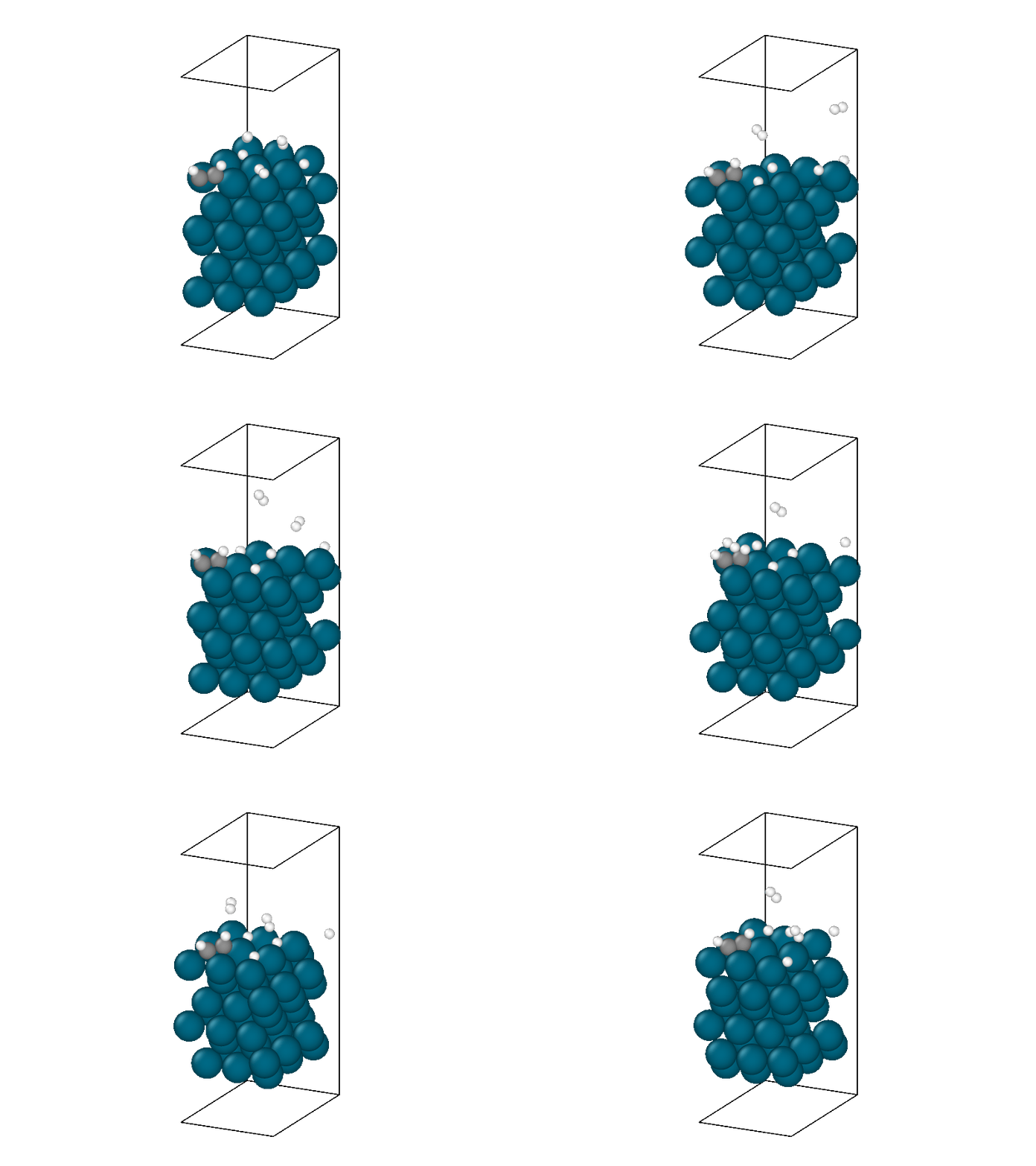
Catalyst Simulations With PHIN
We use PHIN-OS to simulate the Horiuti–Polanyi mechanism for acetylene hydrogenation, a widely used process for purifying industrial hydrocarbon streams. The case study validates a reproducible digital workflow that can subsequently be used to rapidly develop novel, cost-effective catalysts.
Read the case study →